
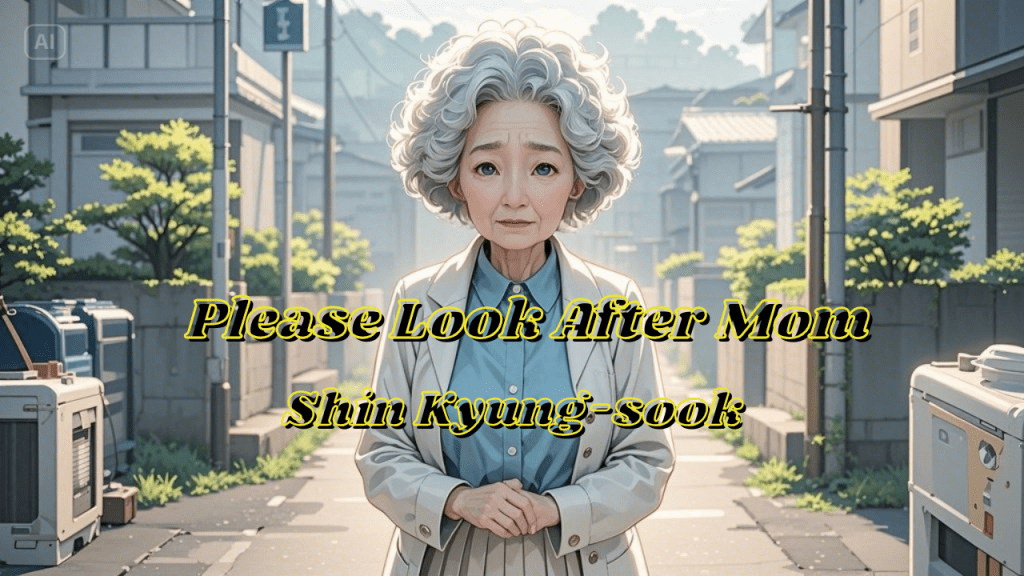
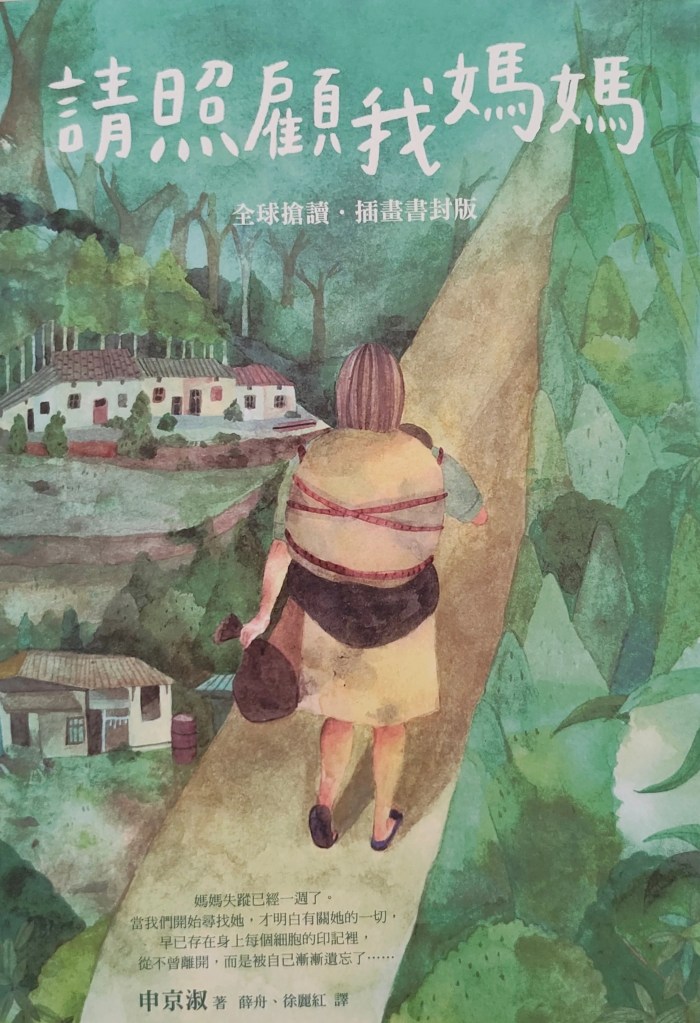
I’ve finished reading the Chinese edition of the Korean novel Please Look After Mom (請照顧我媽媽) (엄마를 부탁해) by Shin Kyung-sook (신경숙). This touching and emotionally charged novel explores the complex dynamics of family relationships, the often-overlooked sacrifices of motherhood, and the deep sense of guilt and regret that arises when we realize how much we take for granted. Its universal themes of love, loss, regret, and familial duty have resonated with readers worldwide. It also won the Man Asian Literary Prize, making Shin the first woman to receive the prestigious award.
Synopsis of the Novel
The narrative begins with the sudden disappearance of Park So-nyo, an elderly mother who becomes separated from her husband in the bustling Seoul Station. Her absence triggers a desperate search by her family, forcing them to reflect on their memories of her and confront the painful truth that they barely know the woman who has quietly devoted her life to them. This is made painfully clear when they find they do not have a recent photo of her for the missing-person flyers.
Divided into four chapters and an epilogue, the story is told from multiple perspectives: So-nyo’s eldest daughter, eldest son, husband, and ultimately So-nyo herself. Through these varying viewpoints, Shin crafts a multifaceted portrait of a woman who is far more complex than her family ever realized, and masterfully unravels the complexities of family dynamics and the emotional disconnect that often spans across generations.
One of the novel’s most distinctive features is its unique narrative structure, which shifts between first-person, second-person, and third-person perspectives. This allows readers to experience the family’s collective guilt, sorrow, and regret from different angles.
In the first chapter, narrated in the second person, So-nyo’s eldest daughter reflects on her regrets about prioritizing her writing career over her relationship with her mother. She belatedly discovers So-nyo’s untreated stroke and severe headaches. This chapter poignantly captures the daughter’s dawning realization that she never truly sees her mother as an individual – only as someone fulfilling the role of “mom”.
The second chapter shifts to a traditional third-person perspective focused on So-nyo’s eldest son, who feels regret for forgetting his promises to take good care of his mother after achieving success. He recalls So-nyo’s tremendous sacrifices for his success and her resilience during his father’s infidelity.
The third chapter returns to second-person narration, this time focusing on So-nyo’s husband. He reflects on their shared history, and becomes painfully aware of how distant he has been emotionally, largely ignoring her sacrifices and illnesses throughout their marriage.
A gripping twist unfolds in the final chapter, narrated in the first person by So-nyo herself. Here, readers gain insight into her inner world – her desires, pain, and quiet suffering. It appears that she is now a spirit, wandering unnoticed by her family as she observes their lives. She visits her youngest daughter, a mother of three who is following in So-nyo’s self-sacrificial footsteps, and her secret male friend who had been her only confidant during difficult times. In the end, she recalls that she wandered aimlessly after being left behind at Seoul Station, remembering nothing except fragments from her early childhood. In a heart-wrenching moment, she collapses from exhaustion, her bruised body cradled by her deceased mother, asking, “Did Mom know? That I, too, needed her my entire life?” (p.248).
The epilogue is set nine months after So-nyo’s disappearance. The eldest daughter, burdened by unresolved grief, visits Rome. While in the Vatican, she purchases a rosewood rosary her mother once requested. Kneeling before the Pietà (sculpture depicting the Holy Mother cradling the dead body of Jesus Christ), she is overcome with emotion. In a poignant moment, she asks the Holy Mother to “please look after Mom.”
Insights and Observations
At its core, the novel examines the silent sacrifices of motherhood. So-nyo, like many mothers, has devoted her life to her family at the expense of her own desires and well-being. As the family members reflect on their time with her, they are overwhelmed by guilt and regret for not having appreciated her enough while she was still with them. The once-vibrant presence that supported them now haunts them as a poignant absence, forcing them to confront their neglect.
Shin’s lyrical prose masterfully captures the weight of unspoken words and missed connections. While the expectation of maternal sacrifices is deeply rooted in Korean culture, the novel transcends cultural boundaries. So-nyo represents not just a generation of Korean women who subordinated personal aspirations to family obligations, but mothers everywhere whose individual identities become overshadowed by their maternal role.
The author’s use of second-person narration (“you”) creates an intimate connection with readers, compelling us to examine our own relationships with our loved ones. It is a meditation on loss—not just the physical absence of a loved one but the emotional realization of how much we overlook in the lives of those closest to us. The novel’s final chapter, featuring So-nyo’s own perspective, is particularly impactful. It reminds readers that behind every mother is an individual with her own dreams, desires, and struggles, often overshadowed by demands of family life.
Please Look After Mom serves as both a mirror and a warning, compelling readers to examine their own relationships with their loved ones. It invites readers to appreciate the quiet sacrifices made by those who love us, and recognize our loved ones in their full humanity before it’s too late. This message resonates particularly strongly in the context of rapid modernization, where traditional family bonds are increasingly strained by contemporary pressures.
Until next post, happy reading! 📖🤩
Reminder: To receive email notifications of new posts, simply click the “Subscribe” button located in the footer.
 Ethel's Culture Notes
Leave a comment